A Buyer's Guide by Lifestyle and Build Type
Choosing where to build a custom home on Amelia Island is one of the most consequential decisions an affluent buyer will make. Get it right and the neighborhood amplifies everything you love about coastal living. Get it wrong and you spend years managing friction between the life you wanted and the one the community was actually designed for.
The island offers genuine variety: deep-water Intracoastal frontage, oceanfront resort communities, golf-and-nature estates, and walkable historic neighborhoods. Each category attracts a different buyer, carries different design restrictions, and demands a different build strategy.
The core question: Before comparing communities, ask yourself three things: How do you want to spend your mornings? How often will you actually be here? And what does "water access" mean to you in practice?
Amelia Island's real estate market has shifted meaningfully heading into 2026. Active listings rose 16.5% year over year, median days on market stretched to 89 days, and the sale-to-list ratio settled near 96%. Buyers have more choice and more leverage than at any point in the past several years. That makes deliberate neighborhood selection more important, not less. The right homesite in the wrong community is still the wrong decision.
This guide matches each of Amelia Island's top neighborhoods to the buyer type, ownership pattern, and build process it actually suits. No single neighborhood wins across every category. The goal is to find the one that fits the life you intend to build.
How Amelia Island Neighborhoods Compare at a Glance
Before diving into each community, here is a side-by-side summary of the key decision factors for custom-home buyers. Use this as a filter, not a ranking.
Neighborhood | Best For | Custom-Build Fit | Water Access | Design Controls | Lock-and-Leave |
|---|---|---|---|---|---|
Crane Island | Waterfront, boating, legacy builds | Excellent | Deep-water ICW, private docks | Strict, curated | Good (gated, managed) |
Long Point | Golf + boating, estate lots | Very Good | ICW and marsh access | Moderate | Moderate |
Amelia Island Plantation / Omni | Resort lifestyle, oceanfront | Limited (mostly resale) | Oceanfront and marsh | High (resort covenants) | Excellent |
Amelia National | Golf-first, mainland affordability | Very Good | None direct | Moderate | Good |
Historic Fernandina Beach | In-town walkability, character | Limited (renovation focus) | Marina access nearby | High (historic district) | Moderate |
North Hampton | Value-driven custom, larger lots | Good | Limited | Moderate | Moderate |
Key takeaway: The sections below explain the reasoning behind each rating. Read the ones that match your shortlist before drawing conclusions from the table alone.
Crane Island: Best for Waterfront Custom Builds and Legacy Homes
Best for: Serious boaters, waterfront buyers, and those building a long-term primary or legacy residence in a curated, low-density setting.
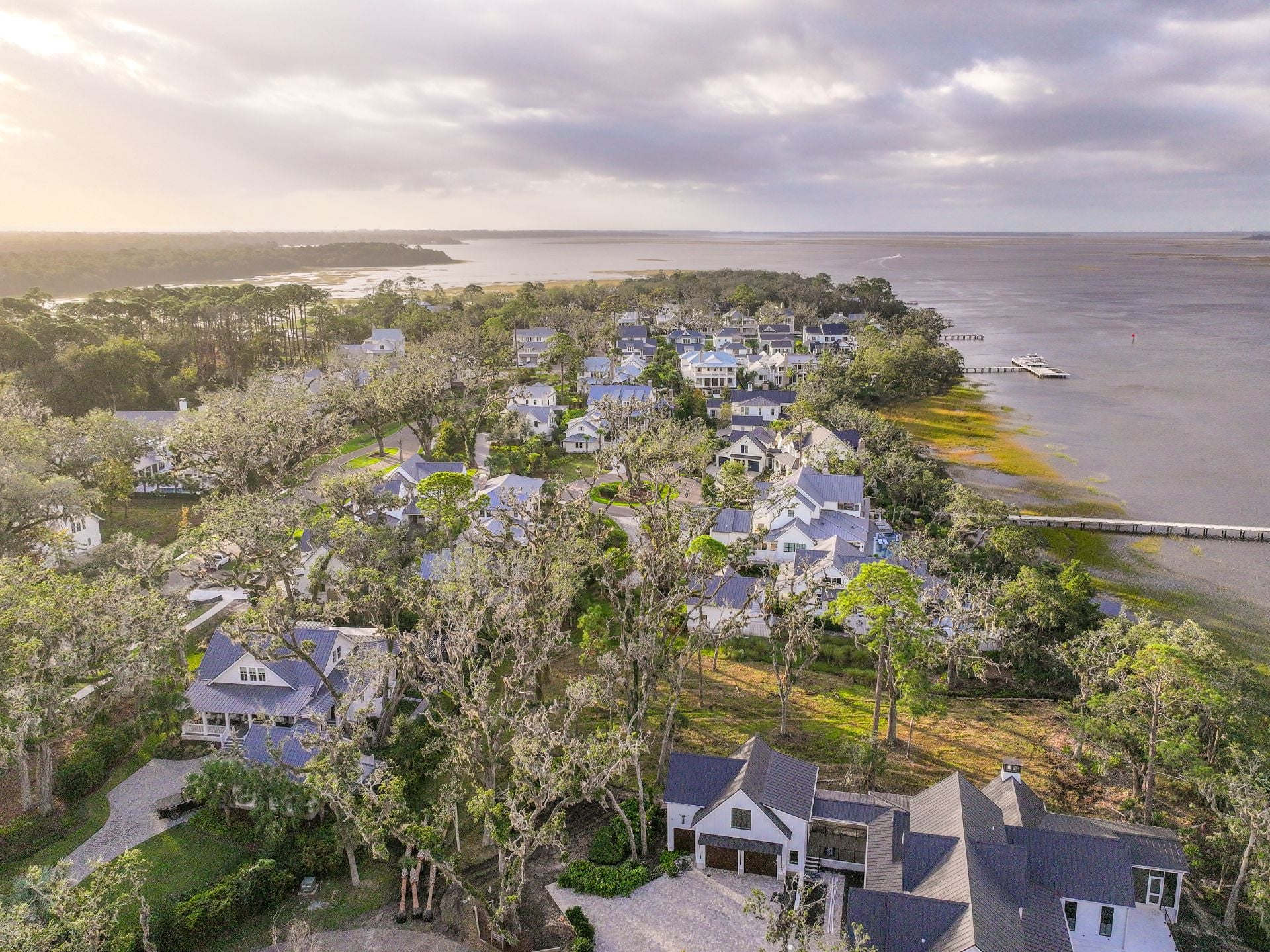
Crane Island occupies a distinct position in the Amelia Island market. As a private, 185-acre island community adjacent to Amelia Island, it holds approximately 113 homesites with nearly 45% of the land reserved as parks, trails, and Intracoastal Waterway frontage. That scarcity is intentional and is the foundation of the community's long-term value proposition.
Why It Stands Out for Custom Builds
Crane Island is purpose-built for custom and semi-custom construction. The community works with a select group of participating builders and enforces detailed architectural guidelines drawn from the Low Country traditions of coastal communities stretching from Fernandina Beach to Charleston. Design quality is protected at the covenant level, not left to chance.
Lot sizes: Average approximately 0.4 acres, with waterfront and marsh homesites commanding premium positioning
Architectural styles: Four defined styles (Florida Homestead, Amelia Artisan, Island Contemporary, New Caribbean) within a cohesive Low Country framework
Design controls: Strict exterior and site-planning requirements; significant freedom for interiors, amenities, and technology
Height limit: 35 feet from grade to the midpoint of the roof
Builder process: All site plans require approval from the HOA and Architectural Review Committee
Water Access
This is where Crane Island separates itself from every other neighborhood on this list. Deep-water Intracoastal Waterway access with no fixed bridges means private docks can accommodate serious vessels. The community features a day dock, private powered boat lifts, and direct access for paddleboarding, kayaking, and powerboating. For buyers who define "water access" as the ability to leave on a boat rather than simply look at one, no other Amelia Island neighborhood matches this.
Tradeoffs to Know
Pricing is firmly in the upper-luxury bracket, with homesites and completed homes well into seven figures. Design controls are among the most rigorous on the island. That is a feature for buyers who want lasting architectural integrity and protected property values. It is a friction point for buyers who want maximum creative latitude on the exterior.
Lock-and-leave fit: Strong. The gated, managed nature of the community, combined with the River House clubhouse, trails, and maintained common spaces, makes extended absences practical without the home or grounds feeling neglected.
Long Point: Best for Golf-Plus-Boating Buyers Who Want Estate Lots
Best for: Buyers who want the largest possible lot, golf-course frontage, and Intracoastal access in a single gated setting.
Long Point is a gated community on Amelia Island that combines three things most neighborhoods force you to choose between: golf-course frontage, marsh and Intracoastal views, and meaningful lot size. Estate lots average around 0.5 acres, slightly larger than Crane Island, and the community's footprint gives buyers genuine breathing room between homes.
Custom-Build Fit
Long Point supports custom construction with fewer architectural constraints than Crane Island, which appeals to buyers who want more exterior design freedom. The tradeoff is a less curated aesthetic environment overall. If cohesive neighborhood character matters as much as individual home design, that distinction is worth weighing carefully.
Lot sizes: Approximately 0.5 acres on average, with some larger estate parcels available
Design controls: Moderate; less prescriptive than Crane Island's covenant structure
Golf access: Direct frontage on the golf course for select homesites
Water access: Marsh views and ICW access, though deep-water dock capability varies by lot
Who Chooses Long Point
The buyer who chooses Long Point typically prioritizes lot size and golf proximity over the tightest possible waterfront access or the most architecturally curated environment. It is a strong fit for buyers building a primary residence who want room for a large pool, guest house, or sport court without feeling constrained by setbacks.
Lock-and-leave fit: Moderate. The gated structure provides security, but the community does not offer the same level of managed common amenities as resort-adjacent neighborhoods.
Amelia Island Plantation / Omni Resort Area: Best for Lock-and-Leave and Oceanfront Living
Best for: Second-home and retirement buyers who prioritize oceanfront access, resort amenities, and minimal maintenance over a true ground-up custom build.
The Amelia Island Plantation area, anchored by the Omni Amelia Island Resort, is the island's most established resort community. It offers oceanfront and marsh-view properties, professional grounds maintenance, and a full suite of resort amenities including golf, beach clubs, dining, and spa services. For buyers whose primary goal is a seamless, low-friction lifestyle with immediate access to the Atlantic, this is the strongest option on the island.
The Custom-Build Reality Check
This is the most important distinction to understand before touring the Plantation area: true custom-build opportunities are limited. Most available inventory consists of resale homes, resort villas, and condominiums. Buyers seeking a ground-up custom home on a raw homesite will find far fewer options here than in Crane Island or Long Point. The resort covenants also impose high design restrictions that can limit exterior expression significantly.
Best fit: Buyers who want to purchase and personalize an existing home, or who prioritize resort infrastructure over custom design
Lock-and-leave: Excellent. Professional management, HOA maintenance, and resort services make this the strongest lock-and-leave option on the island
Short-term rental potential: Many resort villas allow short-term rentals, providing income to offset holding costs
Water access: Oceanfront and marsh, with beach access managed through the resort
Who This Neighborhood Serves Best
The retirement buyer who wants to arrive and immediately enjoy the island, without managing a multi-year custom build process, will find the Plantation area the most frictionless path. It is also the right answer for second-home buyers who plan to spend fewer than 90 days per year on the island and want professional management in place during absences.
The honest tradeoff: If you want a home that reflects your specific architectural vision from the ground up, this is not the right starting point.
Amelia National: Best for Golf-First Buyers Seeking More Lot for the Dollar
Best for: Buyers who want a custom build centered on golf, with more lot size and a lower price per square foot than island communities.
Amelia National Golf and Country Club is a gated community on the mainland side of Nassau County, a short drive from the island. It offers custom-build opportunities on generous lots with golf-course frontage, a Tom Fazio-designed course, and a full clubhouse. For buyers whose primary leisure activity is golf and who are less focused on water access, Amelia National delivers strong value relative to island pricing.
Pricing: Notably lower price per square foot than island communities; one of the stronger value propositions for custom builds in the broader Amelia Island market
Lot sizes: Larger than most island options, with direct golf-course frontage available
Water access: No direct Intracoastal or ocean access; not the right choice for boating buyers
Design controls: Moderate; more flexibility than Crane Island, less resort-level restriction than the Plantation area
Lock-and-leave fit: Good, with gated security and HOA management in place
The Key Tradeoff
Amelia National is not on the island. For buyers who want to walk to Fernandina Beach's historic downtown, launch a boat from a private dock, or simply feel the particular quality of light that comes with living surrounded by water, the mainland location is a meaningful distinction. For buyers primarily building around a golf lifestyle who want maximum square footage for their budget, it is a compelling option that should not be dismissed simply because of its zip code.
Historic Fernandina Beach: Best for In-Town Character and Walkability
Best for: Buyers drawn to the texture of a real historic town, walkable to restaurants, galleries, and the marina, who are open to renovation over new construction.
Fernandina Beach's historic district is one of the most intact Victorian-era downtowns on Florida's coast, and that character is precisely what attracts a specific kind of buyer. The neighborhood offers proximity to the waterfront marina, Centre Street dining, and the kind of established community feel that newer planned developments take decades to build.
The honest constraint for custom-build buyers is that true ground-up construction opportunities in the historic district are rare. Nassau County's historic preservation guidelines impose significant design controls on new construction and renovation alike, and available lots are limited. Most buyers attracted to this area are purchasing existing homes for thoughtful renovation rather than building from scratch.
Best fit: Buyers who want a primary residence deeply embedded in the life of the town
Water access: Marina access nearby, but no private dock capability within the historic district itself
Design controls: High; historic district guidelines govern exterior materials, massing, and architectural character
Lock-and-leave fit: Moderate; no HOA management infrastructure, so extended absences require independent property management arrangements
The bottom line: If the soul of what you want is a custom home that reflects your architectural vision, built on a homesite chosen for its natural setting and long-term value, the historic district is likely not the right answer. If what you want is to live inside a beloved, living town, it may be exactly right.
North Hampton: Best for Value-Driven Custom Builds on Larger Lots
Best for: Buyers who want a custom build with generous lot sizes, a gated setting, and lower price points than the island's premium communities.
North Hampton is a gated golf community on Amelia Island that tends to attract buyers who want more home for their budget without sacrificing the island address. Lot sizes are competitive, the community is established, and the HOA infrastructure provides a reasonable lock-and-leave baseline.
Custom-build fit: Good; the community supports new construction with moderate design controls
Lot sizes: Generally larger than the island average, with some golf-course frontage available
Water access: Limited; not the right choice for buyers prioritizing boating or oceanfront
Design controls: Moderate; enough structure to protect property values without being overly restrictive
Lock-and-leave fit: Moderate; gated with HOA management, though not resort-level service
Where North Hampton Fits in the Buyer Mix
North Hampton is the right answer for the buyer who wants an island custom build but finds Crane Island or Long Point priced beyond their target range, or who simply needs more square footage for their budget than premium waterfront lots allow. It is not a consolation prize. It is a different set of priorities, and for buyers whose lifestyle centers on golf and community rather than boating and water access, it competes well on value.
How to Choose: Match the Neighborhood to the Life You're Building
The right neighborhood is not the most expensive one, or the most famous one. It is the one whose daily rhythms match the life you are actually building. Here is a simple decision framework to narrow your shortlist.
If your priority is... | The strongest fit is... |
|---|---|
Deep-water boating and curated custom architecture | Crane Island |
Large estate lot with golf and some water access | Long Point |
Oceanfront resort living with minimal maintenance | Amelia Island Plantation area |
Golf-first lifestyle with maximum lot for budget | Amelia National |
Historic town character and walkability | Fernandina Beach historic district |
Island address with value-driven custom build | North Hampton |
Three Questions Worth Answering Before You Tour
Most buyers arrive on the island with a neighborhood in mind and leave with a different one. That is not a failure of research. It is what happens when you experience the actual daily rhythm of a community rather than reading about it. To accelerate that process:
Visit at different times. A waterfront community at sunrise and a golf community on a Tuesday afternoon feel entirely different from the same locations on a Saturday afternoon in peak season.
Define water access precisely. "On the water" means something different at Crane Island (private dock, no fixed bridges, offshore-capable boats) than at Long Point (marsh views, ICW access, smaller vessels). Know which one you actually want.
Be honest about how often you'll be here. Lock-and-leave fit matters enormously for second-home buyers. A community that requires active management during absences is the wrong choice for someone visiting six weeks a year.
The buyers who end up most satisfied are those who asked the question that matters most before signing anything: Can I picture the specific life I want, in this specific place?
Working with a Local Expert
Navigating architectural review committees, covenant restrictions, builder approval lists, and lot-specific water access rights requires someone who knows these communities from the inside. The difference between a homesite that works for your build and one that creates two years of friction is often a single conversation with the right advisor before you make an offer.
Cabana Lane's neighborhood strategy consultations are built around exactly this kind of matching. If you are relocating to Amelia Island or considering a custom build and want a clear-eyed read on which community fits your ownership pattern, lifestyle, and build goals, that is where the conversation starts. You can also explore available new construction across the island's communities or review the Amelia Island relocation guide for broader context on life here before narrowing to a neighborhood.
Check out this article next