
Fernandina Beach has never been the kind of place where architecture feels accidental.
On Amelia Island, architecture has always been a conscious response to climate, industry, preservation, and each generation’s sense of place. This intentional approach created a landscape where buildings feel rooted in their environment—distinctive, authentic, and shaped by what surrounds them.
And if there is one feature that quietly tells that story better than almost any other, it is the porch.
In Fernandina Beach, porches were never simply decorative. They provided shade, airflow, shelter from summer rain, and a gentler transition between private and public life. Over time, they also became status symbols, gathering spaces, and one of the most recognizable features of historic Amelia Island homes.
To understand the architecture of Fernandina Beach, it helps to start there.
A Town Built in Layers
The architectural history of Fernandina Beach begins long before the Victorian homes that now define much of its historic character.
Old Town Fernandina was originally laid out under Spanish rule according to the Law of the Indies, a planning system that brought order and geometry to colonial settlements. That early grid established a structure for the town that still matters today. Even as buildings changed, expanded, disappeared, and were rebuilt, the underlying logic of the place remained.
By the 19th century, Amelia Island had become increasingly important as a maritime and commercial hub. The construction of the Amelia Island Lighthouse in 1838 reflected that growing significance, marking the island not only as a point of navigation, but as a place already tied to movement, trade, and permanence.
Then came the railroad.
With the arrival of David Yulee’s Florida Railroad in the 1850s, the center of activity shifted from Spanish Old Town toward what became the New Town and downtown core. Centre Street emerged as the commercial spine of Fernandina, and architecture began to reflect a town moving into a more prosperous and visible era.
The Architectural Golden Age of Fernandina Beach
From roughly 1870 to 1910, Fernandina Beach entered what is often considered its architectural golden age.
Fueled by rail access, shipping, tourism, and economic growth, the town developed an extraordinary concentration of late 19th-century architecture. Queen Anne, Italianate, Colonial Revival, and other Victorian-era styles took hold, especially in residential areas where homes became both functional dwellings and highly visible expressions of wealth, taste, and ambition.
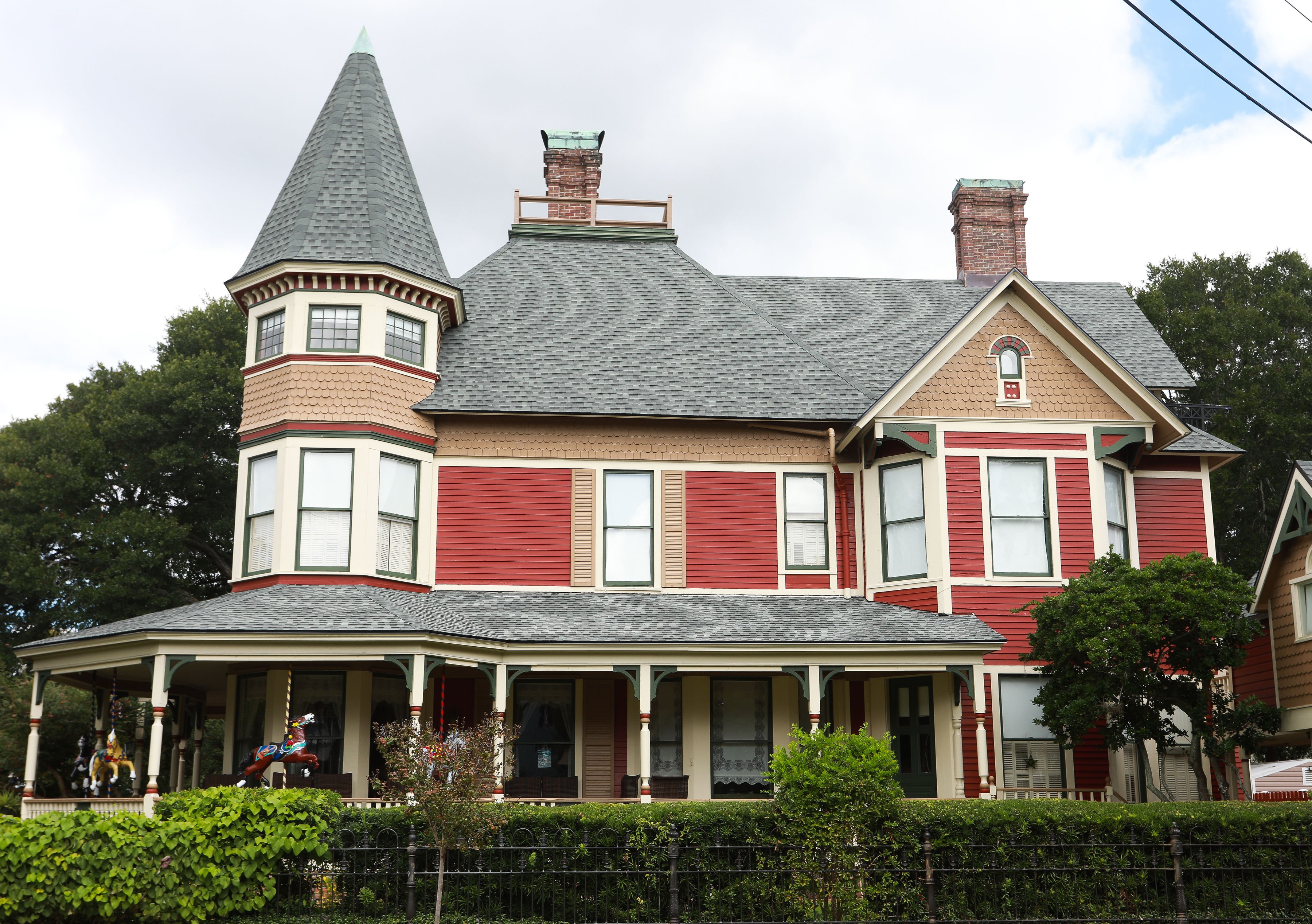
This is the Fernandina Beach many people recognize today: ornate trim, asymmetrical facades, towers, stained glass, decorative brackets, and streets lined with homes that still feel deeply expressive more than a century later.
But one of the most defining features of many of these houses was not the turret or the shingles. It was the porch.
Why Porches Became So Important on Amelia Island
On Amelia Island, the porch began as a practical response to the climate.
In coastal Florida, a home had to contend with intense sun, humidity, salt air, and frequent rain. Before air conditioning, porches provided much-needed shade and ventilation. They helped cool interior spaces, protected windows and doors, and created a comfortable outdoor room that could be used throughout much of the year.
In other words, the porch worked.
It made the house more livable. It softened the heat. It caught the breeze. It created shelter without shutting life off from the outdoors.
That practicality is part of why porches became so widespread across Southern and Florida vernacular architecture, but in Fernandina Beach, they also evolved into something more than purely functional. They became part of the visual language of the home itself.
The Rise of the Southern Porch as Architectural Identity
As Fernandina grew wealthier in the late 19th century, porches became larger, more detailed, and more central to the overall design of the house.
Wraparound porches, deep verandas, turned posts, decorative railings, and layered rooflines transformed the porch into a statement feature. In Queen Anne homes especially, the porch often helped define the entire front elevation, adding rhythm, ornament, shadow, and movement.
It also changed how a home met the street.
A porch created a threshold space between public and private life. It was not fully indoors, but it was not quite outside in the open either. It allowed for observation, conversation, arrival, and pause. It made room for daily life to spill outward just enough to feel connected to the neighborhood.
That social role matters. In Southern towns, porches have long functioned as informal gathering places, places to sit in the evening, greet neighbors, watch the weather roll in, or simply mark the passing of the day. In Fernandina, where streetscapes still retain so much of their historic rhythm, porches remain one of the clearest signs that homes here were designed not just for shelter, but for living well within a community.
Victorian Fernandina and the Porch as Status
As architecture became more expressive during Fernandina’s Victorian era, the porch also became a marker of prosperity.
Large porches suggested leisure. Decorative detailing suggested craftsmanship and expense. A sweeping wraparound veranda said something about the scale of the house, the confidence of its owner, and the social aspirations of the time.
Homes like the Bailey House, one of the city’s best-known Queen Anne residences, illustrate this shift beautifully. With its dramatic silhouette and wraparound porch, it reflects both the climatic logic of coastal Florida and the ornamental exuberance of the late 19th century.
In Fernandina Beach, the porch was doing two jobs at once. It was helping the house breathe, and it was helping the house speak.
Materials, Craftsmanship, and Coastal Context
The porches of Fernandina Beach also tell a story about materials.
Many of the island’s historic homes were built of native heart pine, a durable regional wood that made the intricate detailing of Victorian porches possible. Turned balusters, decorative posts, brackets, rails, and trim all relied on the availability of wood and the craftsmanship to shape it.
At the same time, Fernandina’s architecture was never limited to one material palette. The city also preserves examples of tabby construction, masonry civic buildings, and other structures that show how deeply local building traditions were tied to the resources of the coast.
Still, when people think of historic Fernandina homes, it is often the wood-framed house with the deep porch that comes to mind first. And for good reason. That combination feels especially native to the island’s architectural identity.
Preservation and the Porches That Remain
Part of what makes Fernandina Beach so distinct today is that so much of this architectural character still survives.
The city’s preservation efforts have helped protect not only individual landmarks but the broader visual rhythm of its historic districts. That matters because porches are not isolated features. They shape the streetscape. They affect scale, proportion, and the relationship between a home and the public realm.
When historic porches are enclosed, stripped of their detailing, or altered without regard for proportion and materials, something larger is lost. The building changes, but so does the feel of the street.
Fernandina has largely resisted that kind of erosion. The result is a historic district where porches still contribute in a meaningful way to the experience of walking the neighborhood, reading the architecture, and understanding how the town evolved.
Why the Porch Still Matters
What is most interesting about the porch may be that it still feels relevant.
Even now, porches answer questions that good architecture continues to ask: how to create shade, how to make a home feel connected to its setting, how to soften the boundary between indoors and out, how to make space for both beauty and use.
In Fernandina Beach, the porch is not just a nostalgic feature from another era. It remains one of the clearest examples of architecture responding intelligently to place.
It is climate-conscious before that became branding language. It is social without being performative. It is beautiful because it is useful, and useful because it understands where it is.
The Lasting Legacy of Fernandina Beach Architecture
The architecture of Fernandina Beach tells the story of Amelia Island in layers.
It reflects Spanish planning, maritime history, rail-driven growth, Victorian prosperity, local craftsmanship, and a coastal environment that shaped how homes had to function. And woven through that story is the rise of the Southern porch, one of the simplest and most enduring features of the historic homes that still define the island today.
In Fernandina, a porch is never just an architectural detail.
It is a reminder that the best homes are not only designed to look beautiful. They are designed to belong.
Check out this article next




Leave a Reply